
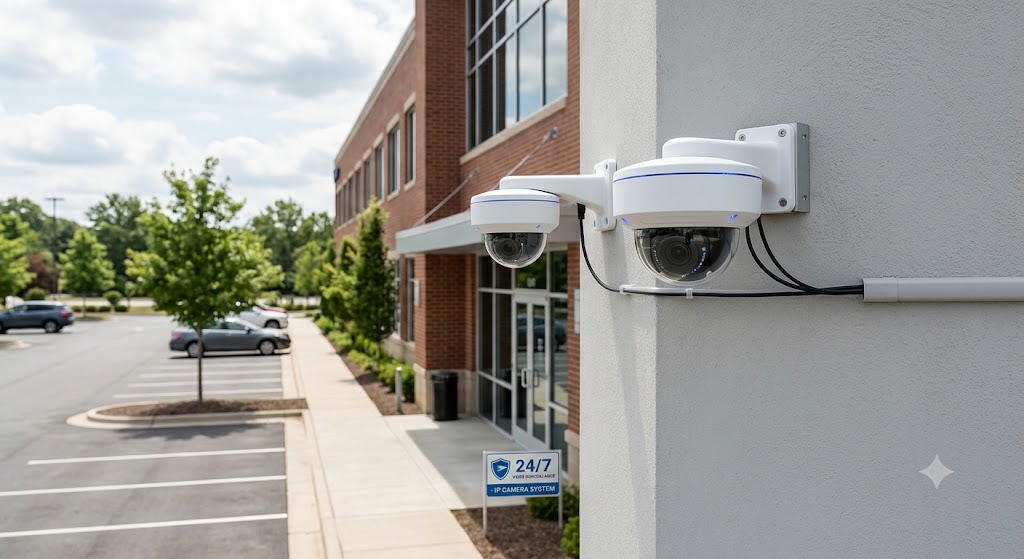
In the rapidly evolving landscape of modern corporate security and property management, traditional surveillance mechanisms are swiftly becoming obsolete. As businesses expand and security threats grow increasingly sophisticated, the need for high-definition, scalable, and intelligent monitoring has never been more critical. Internet Protocol (IP) camera systems represent the pinnacle of this digital evolution, transforming visual security from a passive recording tool into an active, intelligent asset network.
Unlike legacy analog Closed-Circuit Television (CCTV) frameworks that depend on point-to-point coaxial cabling and centralized digital video recorders (DVRs), IP camera systems leverage native local area networks (LAN) and internet infrastructure. This shift to packet-based digital transmission allows each camera to function as an independent network device with its own IP address, processing power, and on-board storage capabilities. For forward-thinking organizations, implementing an enterprise-grade IP surveillance network is no longer a luxury—it is a fundamental baseline for operational safety, accountability, and risk mitigation.
How IP Camera Systems Work
At its core, an IP camera architecture captures video footage digitally and encodes it natively right at the edge of the network. The visual data is instantly converted into digital packets using advanced compression codecs such as H.264 or H.265 (High-Efficiency Video Coding). These data packets are then transmitted securely over standardized Ethernet cables—typically Category 5e, Category 6, or 6A—directly to local network switches, Network Video Recorders (NVRs), or cloud-hosted storage instances.
A key structural component of modern IP deployments is Power over Ethernet (PoE) technology. Through PoE, a single network cable simultaneously carries both high-speed data streams and electrical power to the camera from a centralized PoE switch. This completely eliminates the requirement to run separate electrical wiring or install dedicated power outlets at every single camera site. As a result, PoE significantly drives down deployment timelines, reduces architectural impact, and lowers upfront physical installation costs for expanding enterprises.
Key Advantages Over Analog CCTV
The technical superiority of IP camera systems over classic analog counterparts manifests across multiple operational dimensions. Chief among these is raw visual clarity. Analog systems are inherently constrained by TV lines (TVL) and older standard resolution baselines, frequently resulting in pixelated, unusable imagery when security teams attempt to digitally zoom in on crucial details during an investigation. IP cameras, by contrast, routinely scale from 4K Ultra-HD up to multi-megapixel panoramic sensors, capturing immaculate facial features, license plates, and transactional nuances even under challenging low-light conditions.
Furthermore, scalability with IP systems is entirely seamless. Expanding an legacy analog network involves running heavy, dedicated physical lines all the way back to a physical box with a fixed number of open ports. With a modern digital infrastructure designed and managed by experts like Dam IT Solutions LLC, adding new cameras is as simple as plugging them into the nearest local network switch or provisioning them via secure wireless pathways. This provides organizations with infinite growth potential without requiring massive infrastructure overhauls.
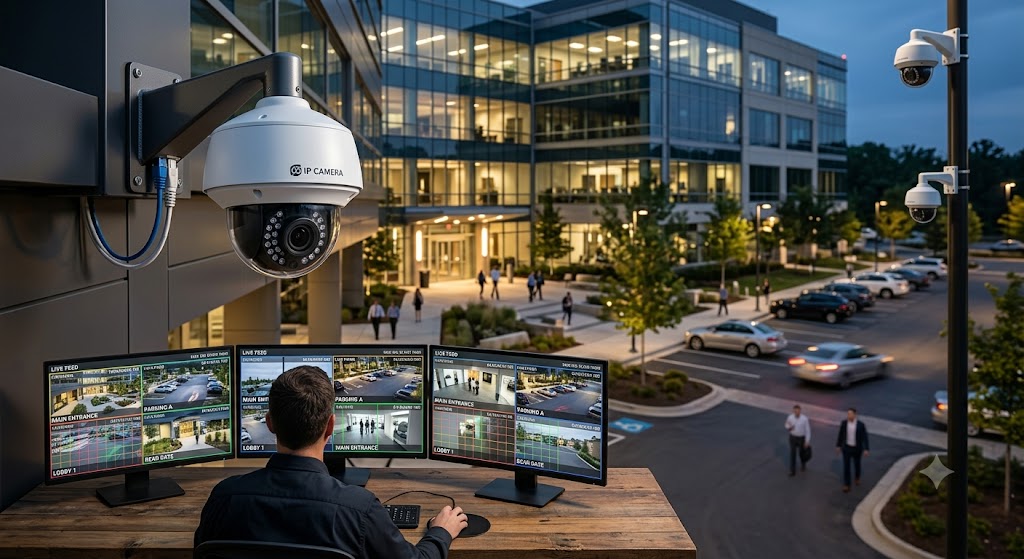
The true paradigm shift delivered by modern IP camera systems lies within embedded artificial intelligence (AI) and edge processing. Contemporary surveillance nodes are no longer blind lenses capturing raw footage; they are advanced computing units equipped with sophisticated computer vision algorithms. These edge-native systems can perform real-time video analytics immediately as events unfold, dramatically reducing the reliance on human security personnel actively monitoring dozens of screens simultaneously.
Advanced capabilities include highly accurate motion detection configured to disregard ambient environmental triggers like wind, shadows, or animals; line-crossing detection for strict perimeter protection; and license plate recognition (LPR) for automated corporate parking access management. Additionally, behavioral analytics can spot unusual loitering, flag unattended baggage in high-traffic zones, or cross-reference crowd densities to ensure physical security and operational flow. Automated real-time alerts can be configured to dynamically ping system administrators the exact millisecond a security anomaly is validated.
Storage Strategies: NVR vs. Cloud vs. Hybrid Hosting
Managing the immense volumes of high-definition digital data generated by a comprehensive IP array requires a deliberate, professionally tailored storage framework. Businesses typically select from three primary structural formats: On-Premise Network Video Recorders (NVRs), purely Cloud-based Software-as-a-Service (SaaS) platforms, or Hybrid storage ecosystems.
On-premise NVRs offer complete localized control, zero reliance on external internet bandwidth for recording, and eliminate recurring monthly cloud storage fees. Cloud-based video surveillance (VSaaS), on the other hand, eliminates physical hardware footprints on-site, provides seamless off-site redundancy against physical theft or unit damage, and offers streamlined remote access from any browser or mobile app globally. Hybrid models merge the strengths of both worlds by recording locally for immediate, low-latency access while backing up mission-critical threat vectors to secure, encrypted cloud repositories.
Securing the Surveillance Network Against Cyber Threats
Because IP cameras exist as active nodes on a digital network, they must be treated with the same meticulous cybersecurity protocols as servers, workstations, and enterprise mobile devices. Unsecured IP cameras represent soft entry points for malicious actors seeking to breach corporate network perimeters, exfiltrate sensitive internal data, or launch distributed denial-of-service (DDoS) attacks. Ensuring absolute system integrity requires a multi-layered defensive posture.
Enterprise network deployments must implement robust end-to-end encryption for data both in transit and at rest, utilize virtual local area networks (VLANs) to isolate the security traffic completely from general corporate data traffic, and enforce strict identity management with Multi-Factor Authentication (MFA). Regular firmware updates and patch management are equally mandatory to neutralize emerging software vulnerabilities before they can be exploited by threat actors.
Partnering with Experts for Enterprise Deployment
Designing, configuring, and maintaining an enterprise-grade surveillance mesh demands professional technical oversight. Selecting the ideal camera form factors—such as dome cameras for indoor discretion, rugged bullet cameras for visual deterrence, or Pan-Tilt-Zoom (PTZ) units for active tracking over wide spaces—is only the first step. True security efficacy depends on precise network bandwidth calculation, strategic placement geometry to eliminate blind spots, and robust cyber hardening.
By partnering with specialized technological integrators such as Dam IT Solutions LLC, organizations ensure their surveillance infrastructure is resilient, fully optimized, and custom-tailored to their unique operational demands. Professional engineering guarantees that your corporate network remains secure, your assets remain highly visible, and your business operates with absolute peace of mind.
