The Cost of Unplanned Downtime
In today’s highly digitized corporate environment, operational continuity isn’t just an advantage—it is a baseline requirement for survival. From small startups to multinational enterprises, organizations rely heavily on a complex web of hardware, software, servers, and network infrastructure to conduct daily tasks. However, many businesses operate under a reactive “break-fix” mindset. They wait for a server to crash, a network switch to fail, or a workstation to malfunction before calling for professional help.
This reactive model is fundamentally flawed. Unplanned downtime disrupts workflow, severely dents employee productivity, and damages customer trust. More importantly, emergency IT repairs frequently command premium emergency fees, straining operational budgets. To mitigate these risks, forward-thinking organizations are turning to structured, proactive maintenance models. Foremost among these strategies is the implementation of an Annual Maintenance Contract (AMC)—a comprehensive, long-term service agreement designed to keep your business-critical infrastructure running optimally around the clock.
What is an Annual Maintenance Contract (AMC)?
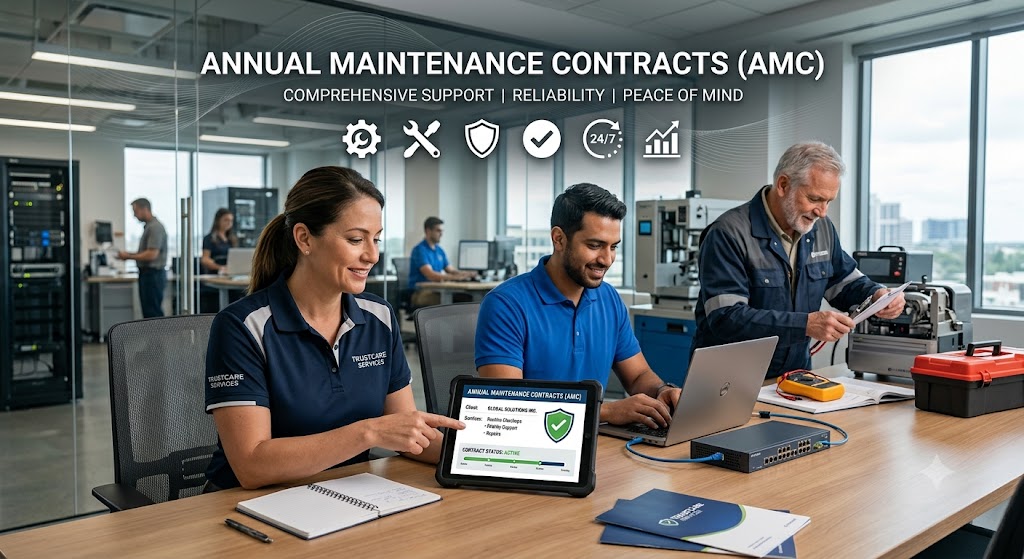
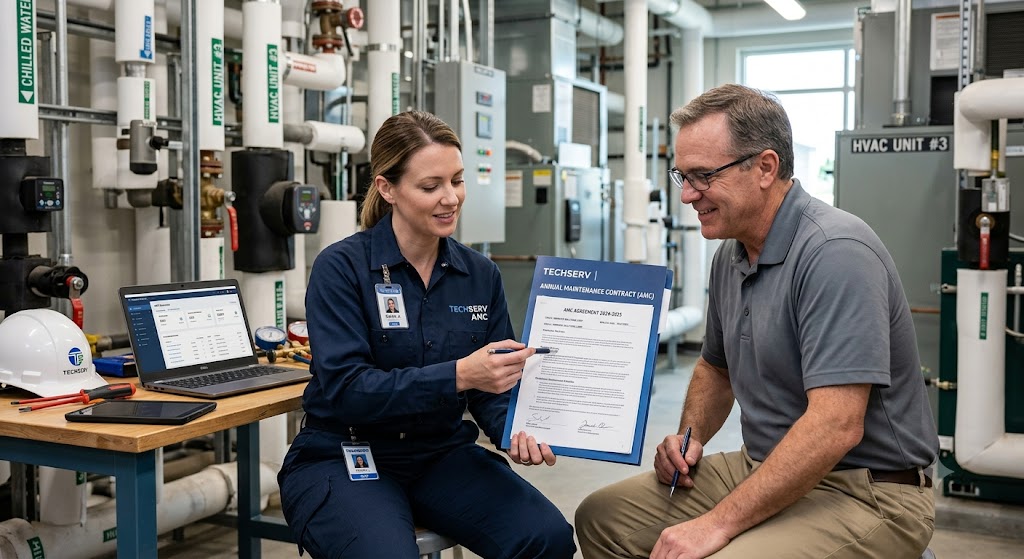
An Annual Maintenance Contract is a formal agreement between a business and an external IT service provider covering the upkeep, optimization, and repair of specific technology assets over a twelve-month duration. Instead of managing unpredictable tech disruptions independently, companies outsource their infrastructure care to dedicated specialists. A well-designed contract ensures that hardware and software systems receive consistent oversight, updates, and troubleshooting.
For modern organizations seeking to secure their technology foundation, partnering with an expert service provider like Dam IT Solutions LLC offers complete peace of mind. An AMC transforms unpredictable, chaotic IT expenses into a structured, predictable, and highly strategic operational framework.
Comprehensive Types of Annual Maintenance Contracts
AMCs are rarely one-size-fits-all agreements. Service providers design contracts flexibly to align with varying corporate budgets, operational risk tolerances, and internal technical capabilities. Generally, these agreements fall into two primary structures:
1. Comprehensive AMCs
A Comprehensive AMC offers all-inclusive operational coverage. Under this agreement, the service fee encompasses both expert technical labor and the physical cost of replacement parts or components. If a server power supply fails or a critical networking switch burns out, the provider replaces the faulty hardware at no additional charge to the client. This format offers maximum financial predictability, shielding organizations completely from unexpected equipment capital expenses.
2. Non-Comprehensive (Labor-Only) AMCs
A Non-Comprehensive contract shifts hardware risk back to the client. The agreement covers all professional engineering labor, routing maintenance, firmware updates, and troubleshooting visits, but excludes the cost of physical spare parts. If a hardware component fails, the service provider diagnoses the issue, but the client must purchase the replacement part separately. This option carries lower upfront contract costs but leaves the client exposed to variable hardware expenses.
The Structural Benefits of an IT AMC
Implementing an AMC delivers significant competitive advantages that ripple across an entire organizational ecosystem. Below are the key strategic benefits businesses experience:
Guaranteed Peak Performance: Regular system checkups, defragmentation, firmware patches, and deep diagnostics prevent underlying technical debt from snowballing into critical failures.
Substantial Cost Predictability: By replacing unpredictable, premium emergency repair invoices with a fixed annual fee, finance teams can allocate resources accurately and optimize operational margins.
Rapid, Priority Response Times: AMC clients enjoy strict Service Level Agreements (SLAs). When an issue arises, contract holders receive priority access to senior engineers, bypassing the standard public queue.
Prolonged Asset Lifespans: Much like regular oil changes preserve an automobile, routine IT maintenance prevents overheating, resource bottlenecks, and premature physical wear on costly corporate hardware.
Bridging the Gap: Integrating IT AMCs with Advanced IP Camera Systems
While standard IT maintenance focuses heavily on workstations and backend databases, physical security infrastructure has evolved into a vital branch of the corporate network. Modern corporate physical security relies entirely on high-definition IP (Internet Protocol) Camera Systems. Unlike legacy analog CCTV systems of the past, contemporary IP cameras are intelligent, high-bandwidth computing devices connected directly to local area networks and cloud storage hubs.
Because IP cameras function as network endpoints, they are susceptible to identical operational risks as servers, including firmware bugs, network IP conflicts, storage drive failures on Network Video Recorders (NVRs), and cybersecurity vulnerabilities. Consequently, an effective corporate IT management strategy must seamlessly integrate IP Camera Systems into an Annual Maintenance Contract. Ensuring your digital security matrix remains online requires the technical touch of a seasoned technology partner like Dam IT Solutions LLC, providing thorough, systematic network and hardware audits.
Key Maintenance Protocols for Enterprise IP Camera Systems
An AMC tailored to modern physical security systems covers a meticulous checklist of software, hardware, and structural elements to maintain absolute surveillance fidelity:
Continuous Firmware & Security Patching: Because network-attached cameras face continuous scanning from automated web threats, maintaining up-to-date firmware is imperative to prevent malicious network incursions.
NVR and Storage Architecture Audits: Surveillance data consumes massive amounts of storage. Regular checks guarantee that hard drive arrays are healthy, video compression codecs function properly, and historical footage retention policies compile seamlessly without data loss.
Physical Camera Cleaning and Realignment: Environmental elements like dust, rain, and vibration can degrade lens clarity or shift a camera’s field of view. Routine onsite visits ensure lenses are pristine and optimal viewing angles remain locked.
Network Bandwidth Optimization: High-resolution video feeds can cause major data congestion. Engineers evaluate network switches, subnets, and Quality of Service (QoS) metrics to keep video traffic fluid without slowing down other business applications.
Selecting the Ideal AMC Partner for Long-Term Success
The operational return on investment of an AMC depends entirely on the proficiency, responsiveness, and scale of your chosen provider. When evaluating prospective technology partners, look beyond the basic price tag and prioritize companies that offer deep engineering expertise, clear communications, and a proven track record in comprehensive infrastructure management.
The ideal partner should possess certified technicians capable of handling complex hybrid environments—ranging from cloud storage configurations to physical on-premise security endpoints. With a committed technology champion like Dam IT Solutions LLC, your business gains a proactive ally dedicated to driving continuous uptime, fortifying security compliance, and allowing your internal team to refocus entirely on core business growth initiatives.
Conclusion: Transitioning from Reactive Stress to Proactive Growth
Relying on a reactive strategy for critical business infrastructure and physical security systems is a high-stakes gamble that eventually leads to costly disruptions. Technology assets require consistent, professional care to sustain peak performance and remain safe from evolving modern digital threats.
Investing in an Annual Maintenance Contract is a definitive transition from operational chaos to calculated, proactive growth. By securing your hardware, network foundations, and IP camera systems under a single, comprehensive management umbrella, you guarantee that your business stays protected, resilient, and permanently prepared for the road ahead.
