
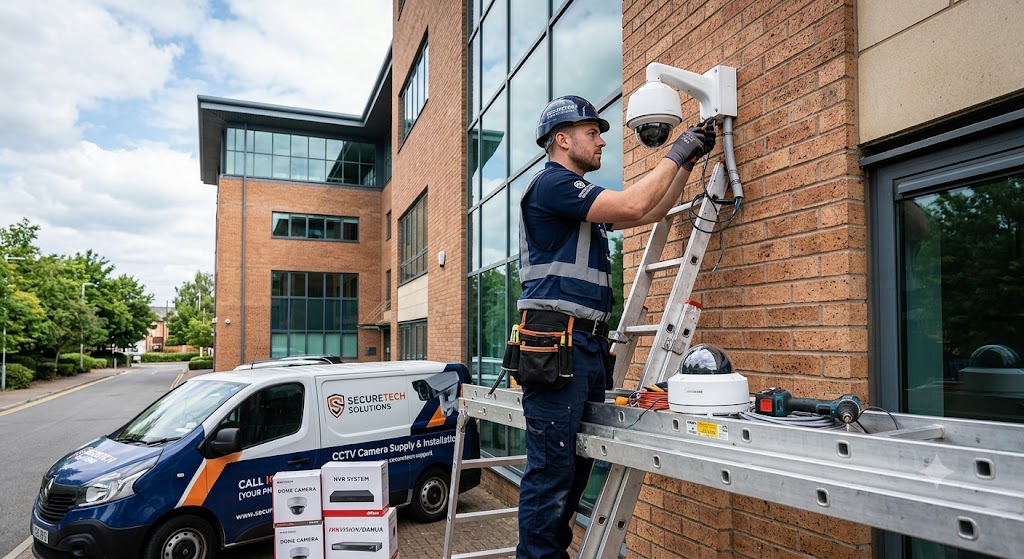
In an era where security challenges are increasingly sophisticated, safeguarding your business infrastructure, intellectual property, and personnel is no longer an optional operational expense—it is a core strategic necessity. Comprehensive surveillance does not merely record incidents; it actively deters criminal activity, optimizes operational workflows, provides irrefutable legal evidence, and fosters a safe environment for employees and clients alike.
However, deploying an effective surveillance architecture requires much more than simply purchasing off-the-shelf equipment and mounting cameras to walls. It demands an enterprise-grade approach to sourcing, systems engineering, network integration, and precise physical deployment. For businesses looking to establish a robust security posture, partnering with a professional systems integrator like Dam IT Solutions LLC ensures that your surveillance infrastructure is scalable, compliant, and optimized for long-term reliability.
1. Understanding the Architecture of Modern CCTV Systems
The modern Closed-Circuit Television (CCTV) ecosystem has evolved dramatically from the grainy, analog tape-recorded systems of the past. Today’s security frameworks leverage internet protocol (IP) networks, edge computing, high-definition optical sensors, and centralized management software to deliver actionable intelligence.
When designing a commercial surveillance system, several foundational components must be synchronized seamlessly:
High-Resolution IP Cameras: Unlike traditional analog cameras, IP (Internet Protocol) cameras capture video as digital data streams. This allows for vastly superior resolutions—ranging from 4K to ultra-high-definition multi-sensor configurations—enabling precise facial recognition, license plate reading, and wide-area coverage without pixelation.
Network Video Recorders (NVRs) and Server Storage: Digital video streams are routed via secure network switches to an NVR or a dedicated storage server. These systems manage data ingestion, video compression (using advanced codecs like H.265 to save bandwidth), and storage retention policies.
Power over Ethernet (PoE) Infrastructure: Modern commercial installations minimize cabling complexity by utilizing PoE switches. This technology delivers both high-speed data connectivity and electrical power over a single Cat6 or Cat6a network cable, reducing points of failure and accelerating deployment timelines.
Video Management Software (VMS): The VMS serves as the central brain of the surveillance operation. It provides security personnel with an intuitive dashboard for live monitoring, multi-camera playback, advanced video analytics, mobile remote viewing, and integration with third-party access control systems.
2. Strategic Camera Placement: Sourcing the Right Hardware for Every Environment
An effective CCTV supply strategy requires selecting specialized hardware tailored to the unique environmental and spatial constraints of your facility. A generic camera model cannot successfully monitor both a dimly lit loading dock and a high-traffic retail checkout counter. Professional integrators conduct meticulous site surveys to determine the precise mix of hardware required.
Perimeter Defense and Building Access Points
The exterior boundary of your facility is your first line of defense. For these areas, bullet cameras equipped with long-range infrared (IR) night vision and weatherproof, IP67-rated housings are essential. These cameras provide a visible deterrent and are engineered to withstand extreme temperatures, dust, and moisture. They should be strategically positioned to cover main entrances, side exits, loading bays, and parking lots.
Internal Spaces and Common Areas
For indoor environments such as lobbies, hallways, and office spaces, dome cameras are generally preferred. Their low-profile, aesthetically discrete design blends seamlessly into commercial interiors. Furthermore, the protective dome casing makes it difficult for onlookers to determine exactly where the lens is pointing, increasing their psychological deterrent factor. For high-vandalism risks, IK10-rated vandal-proof dome housings are deployed to resist physical tampering.
Wide-Area Monitoring and Dynamic Tracking
In expansive environments like logistics warehouses, large manufacturing floors, or open-air yards, Pan-Tilt-Zoom (PTZ) cameras offer unparalleled versatility. Security operators can remotely manipulate the camera’s field of view, tilt angles, and optical zoom to track suspicious individuals or vehicles in real-time. Modern PTZ systems can also be programmed to execute automated patrol routes or snap to specific zones when triggered by external motion sensors.
By sourcing industry-certified equipment through a trusted provider like Dam IT Solutions LLC, businesses gain access to enterprise-grade warranties, robust firmware support, and cyber-hardened hardware designed to resist digital vulnerabilities.
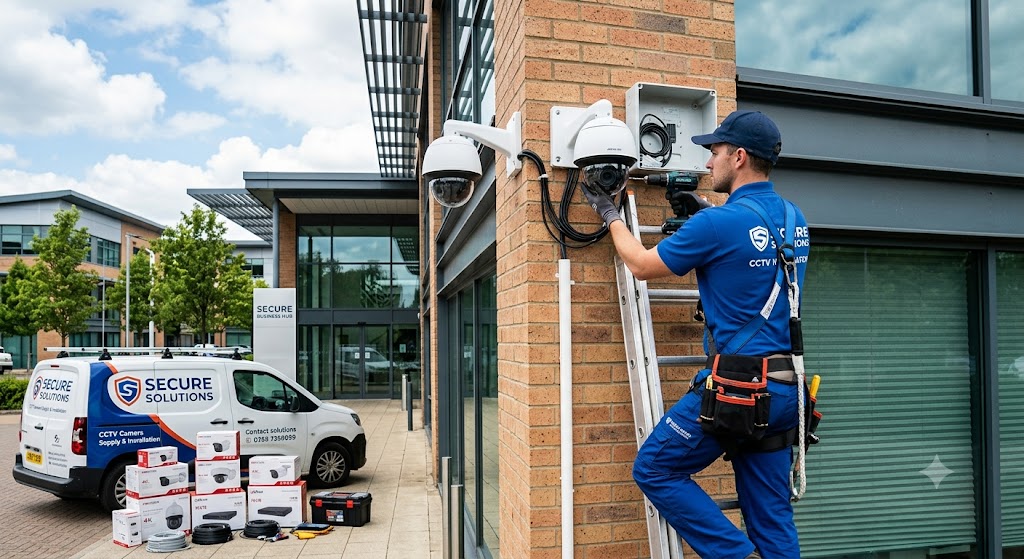
3. The Enterprise Installation Process: Why Professional Deployment Matters
The performance of an elite surveillance system is fundamentally capped by the quality of its physical and logical installation. Attempting an amateur or uncertified installation frequently results in blind spots, unstable network connectivity, frequent equipment failures, and severe cyber-security vulnerabilities.
A professional installation structured by experienced engineers follows a rigorous, multi-phased lifecycle:
Phase 1: Structured Cabling and Network Optimization
The backbone of any IP-based CCTV system is its network cabling infrastructure. Professional installers utilize shielded twisted-pair (STP) Cat6 cabling routed through protective conduits to isolate video traffic from electromagnetic interference caused by high-voltage electrical lines or heavy machinery. Furthermore, because high-resolution video streams can severely congest a standard corporate local area network (LAN), network engineers isolate the surveillance traffic onto its own dedicated Virtual Local Area Network (VLAN). This guarantees constant video bandwidth and protects the core business data network from slowdowns.
Phase 2: Precision Mounting and Angle Calibrations
Cameras must be mounted to structurally sound surfaces at optimized heights to balance maximum field of view with identifiable facial capture. If a camera is mounted too high, it records only the tops of people’s heads; if mounted too low, it becomes vulnerable to manual blinding or vandalism. Installers utilize specialized field monitors to calibrate focal lengths, adjust wide dynamic range (WDR) settings to handle harsh backlighting, and set precise privacy masks over restricted areas to maintain regulatory compliance.
Phase 3: Storage Calculations and Redundancy Configurations
Video retention requirements vary by industry; some sectors require 30 days of continuous recording, while financial or government institutions may mandate 90 days or more of archived footage. System integrators program advanced recording schedules—such as continuous sub-stream recording paired with full-resolution recording triggered exclusively by motion—to maximize storage efficiency. Additionally, configuring RAID storage arrays within the NVR ensures that even if a hard drive physically fails, no critical security footage is lost.
4. Leveraging Next-Generation Video Analytics and AI
The contemporary security landscape has shifted from passive post-incident review to proactive, real-time threat mitigation. This shift is powered by Artificial Intelligence (AI) and edge-based video analytics integrated directly into modern camera firmware and VMS platforms.
By implementing advanced analytics, businesses can automate their threat detection vectors:
Line Crossing and Perimeter Intrusion Detection: Virtual tripwires can be drawn across digital boundary lines. If an unauthorized individual or vehicle crosses the line during restricted hours, the system instantly transmits an alert with a video snapshot to monitoring personnel.
Human and Vehicle Classification: Advanced AI engines filter out false alarms triggered by environmental factors such as wind, blowing debris, rain, or small animals. The system specifically categorizes targets as human or vehicular, allowing security staff to focus purely on genuine threats.
Anomalous Behavior and Loitering Alerts: Cameras can be programmed to detect individuals lingering in designated high-security areas for extended durations, triggering a pre-emptive response before an escalation occurs.
5. Long-Term Maintenance, Support, and Compliance
A professional CCTV camera supply and installation project does not conclude when the physical hardware is mounted. Surveillance infrastructure operates continuously under demanding conditions and requires structured, preventative maintenance to guarantee operational longevity.
Regular service agreements include essential lifecycle support tasks:
Lens Cleaning and Enclosure Inspections: Removing accumulated dust, spiderwebs, and moisture spots that degrade image clarity.
Firmware and Patch Management: Promptly updating camera and NVR firmware to fix software bugs and patch critical cybersecurity vulnerabilities.
Storage and Backup Audits: Verifying health metrics of surveillance-grade hard drives and ensuring uninterrupted backup routines.
Regulatory Compliance Reviews: Ensuring camera angles comply with local privacy laws and workplace surveillance regulations.
Partnering for a Secure Future
Investing in a commercial surveillance system is one of the most critical decisions you will make to protect your enterprise’s physical assets, operational continuity, and peace of mind. By trusting a specialized, licensed integrator to oversee the entire lifecycle of your system, you ensure that your investment delivers crystal-clear imaging, unbreakable network reliability, and modern AI capabilities tailored precisely to your operational workflows.
For top-tier consultation, customized technology sourcing, and seamless multi-site deployment, contact the security integration experts at Dam IT Solutions LLC today to design a surveillance ecosystem engineered for the challenges of tomorrow.
